Originally posted on July 1, 2018.
While significant advances are being made in the shop, they are not the type that can be shown with photos or narrative yet. Therefore I thought I would try to describe what it’s like to be at Bonneville.
The Salt Flats were formed when ancient Lake Bonneville dried up. The lake was huge, filling much of the Great Basin. It eventually shrank below its outlet and so its water became salty. As water continued to evaporate, salt deposits were left in many areas. It stretches over 30,000 acres and is located along I-80 near the Utah-Nevada border. The famous Bonneville Speedway is located in the western portion of the flats, near Wendover. It is perfectly flat and has a thick crust of salty soil. It looks like a frozen lake bed covered with snow. No vegetation grows in that area.
Wendover is split between Utah and Nevada with the Nevada side having all the glitz of a casino town. The Utah side appears in stark contrast with a few NON-casino hotels and an obvious lack of glitz. Other than a few fast food restaurants, a grocery store and a truck stop there is not much else. When we first started competing out there the casinos offered cheap but nice accommodations. That was a comfort after the long hot days on the salt. For this trip we were very nervous about being able to book rooms at one of the casinos. They have gotten much more restrictive and expensive for the competitors since the competitors are not there to gamble. If you cannot get rooms in Wendover then you have to travel 2 hours each way from Salt Lake City.
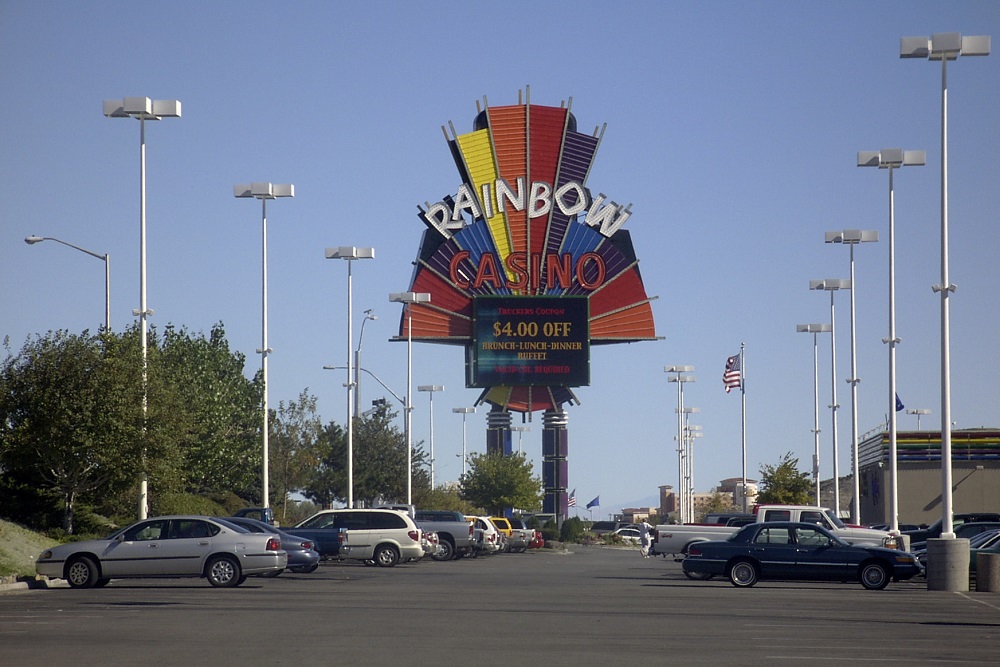
We have normally had to book a few extra days before the Speed Week event because the 2200 mile trip out there is so long. We didn’t want to have problems along the way that would prevent us from actually making it to the event. Thus, the Rainbow Hotel and Casino became our home-away-from-home for a few days. The year this photo was taken we had a part on the car to break, had to order it and have it delivered to the Rainbow and Mike made the repair in the hotel parking lot before Speed Week began.
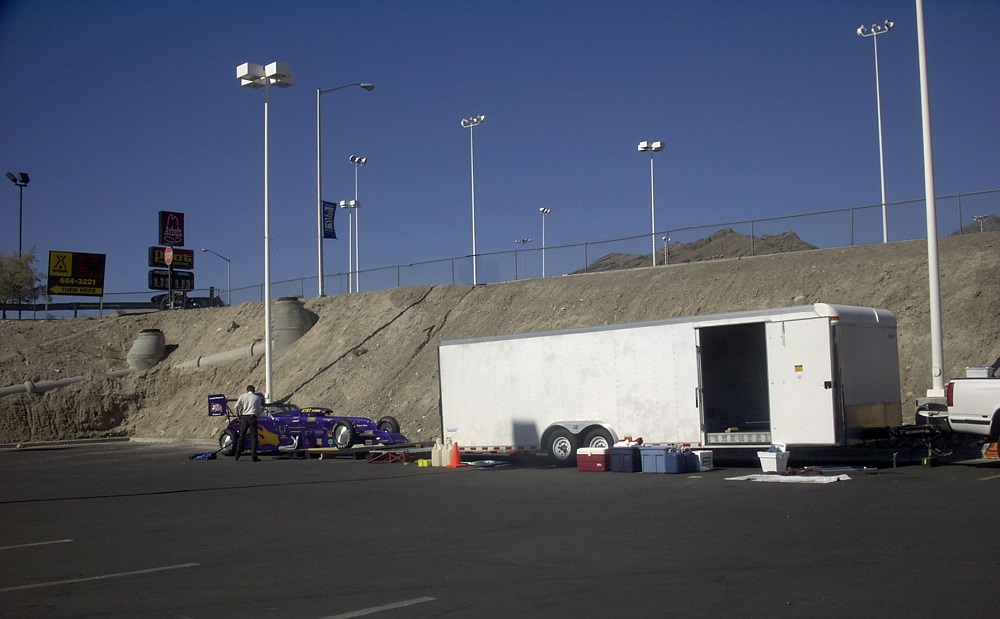
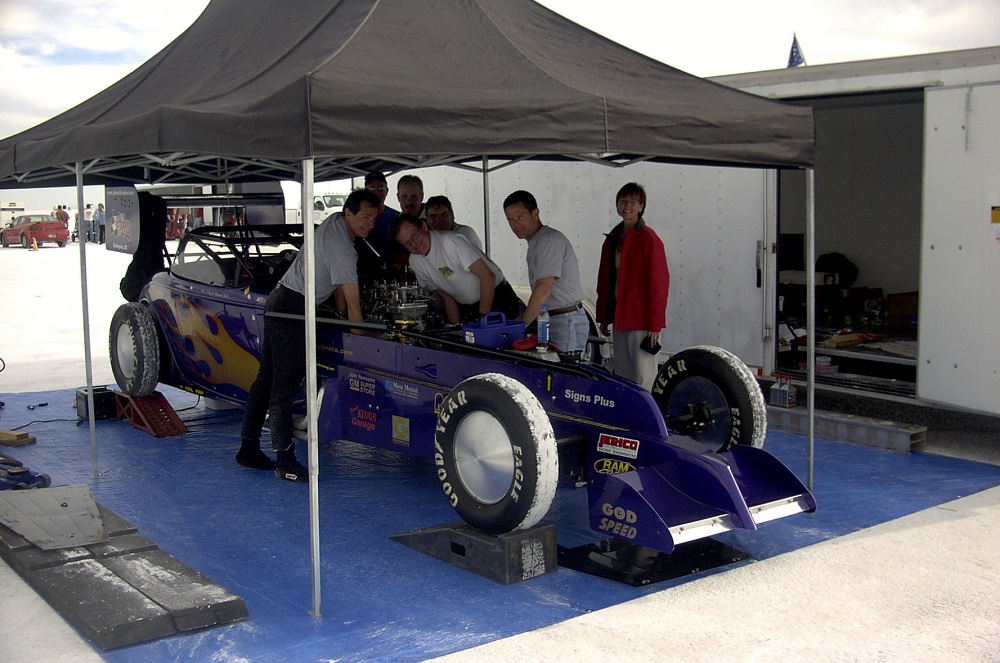
The daily schedule would normally be to get up and be on the salt as the sun was rising. We had to erect the pop-up tent over the car, get out all of the support equipment, pack the parachutes and tend to any details on getting the car ready to run. Then we would get in line as quickly as possible to make the first pass. You see here I am wearing a jacket. It is actually refreshingly cool in the mornings. It doesn’t take long for that to give way to relentless sun. We were warned early on that sunscreen should be applied even underneath your shorts because of the sun reflecting off the salt. I will say that the heat is totally different from South Carolina, in a good way, since there is very little humidity.
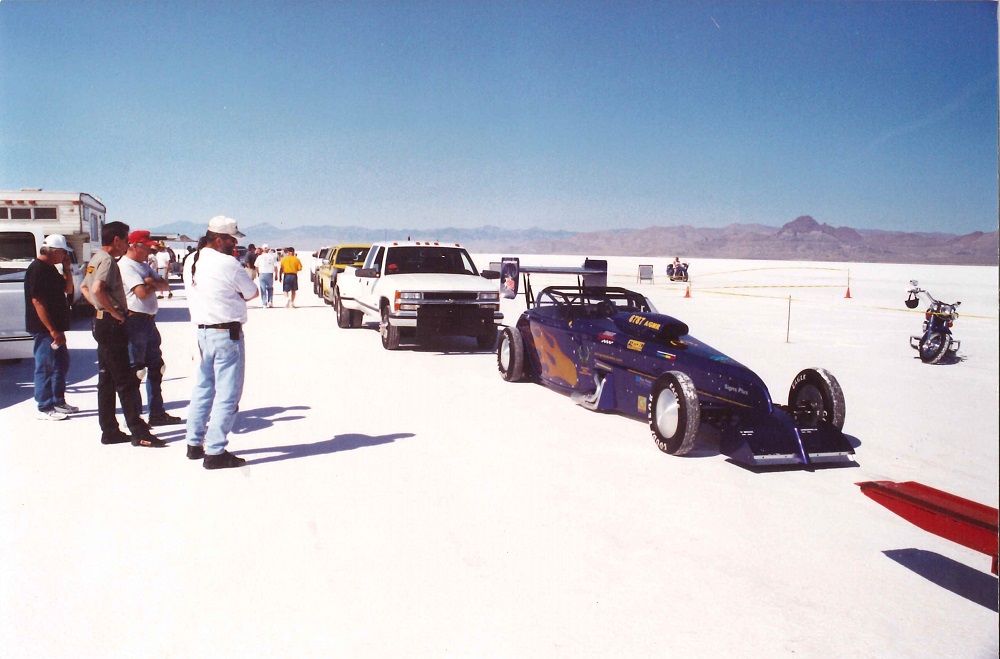
Here you see competitors in line and spectators wandering around. Once in line there can be a pretty long wait. This is not uncharacteristic of racing of any sort in my experience.
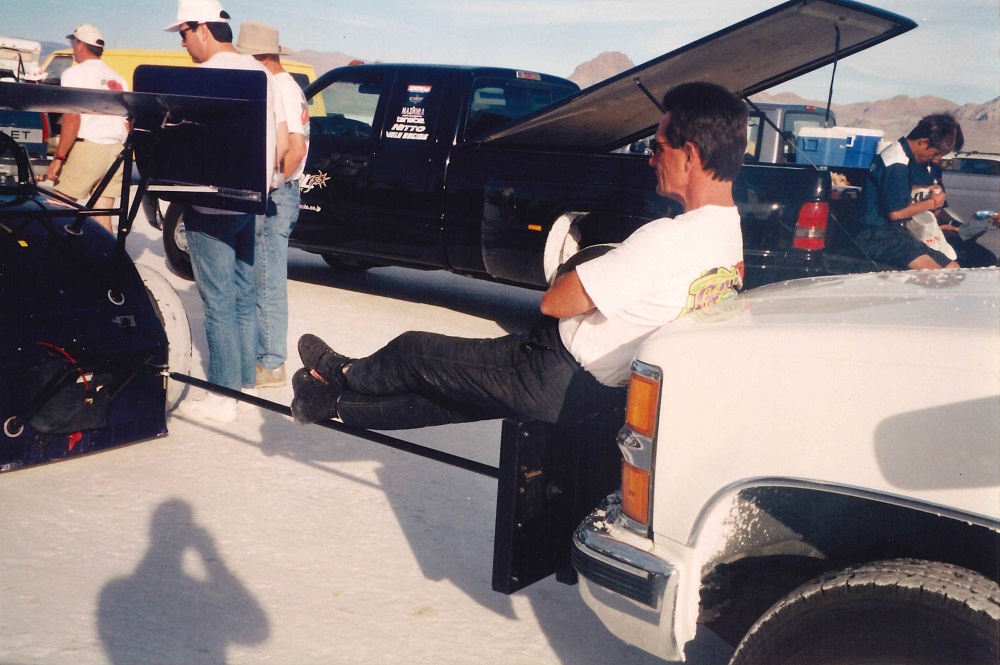
Mike, who normally does not sit still very well, waiting . . . He is sitting on the push pad mounted to the front of our truck. We used the bar mounted between the push pad and the car to move the car around. Once at the starting line we would remove the bar and push the car until it was up to 50 mph or so. Then the car would leave us “in the dust”. The cars are geared very high so they do not start up and accelerate well at low speeds. Once the car took off we would follow it to the other end of the track and help get the car back to the pits to get ready for another pass.
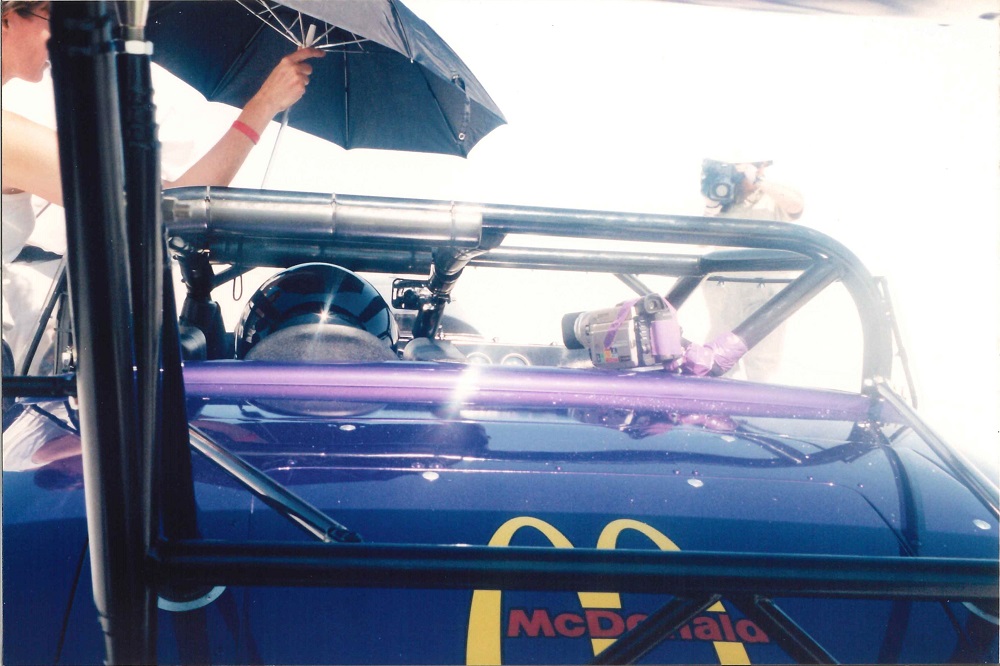
Here Mike was fully suited up and strapped in near the starting line. Notice me holding an umbrella over the cockpit of the car to keep Mike as cool as possible. Also notice the camera of some of the news media on the scene.
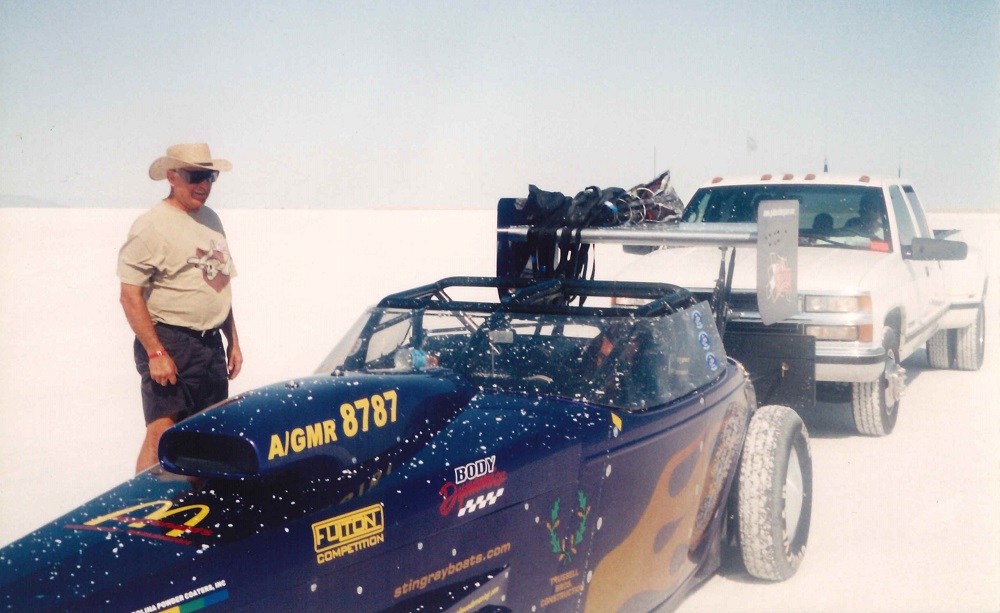
Here is the car at the end of the long course after a run.
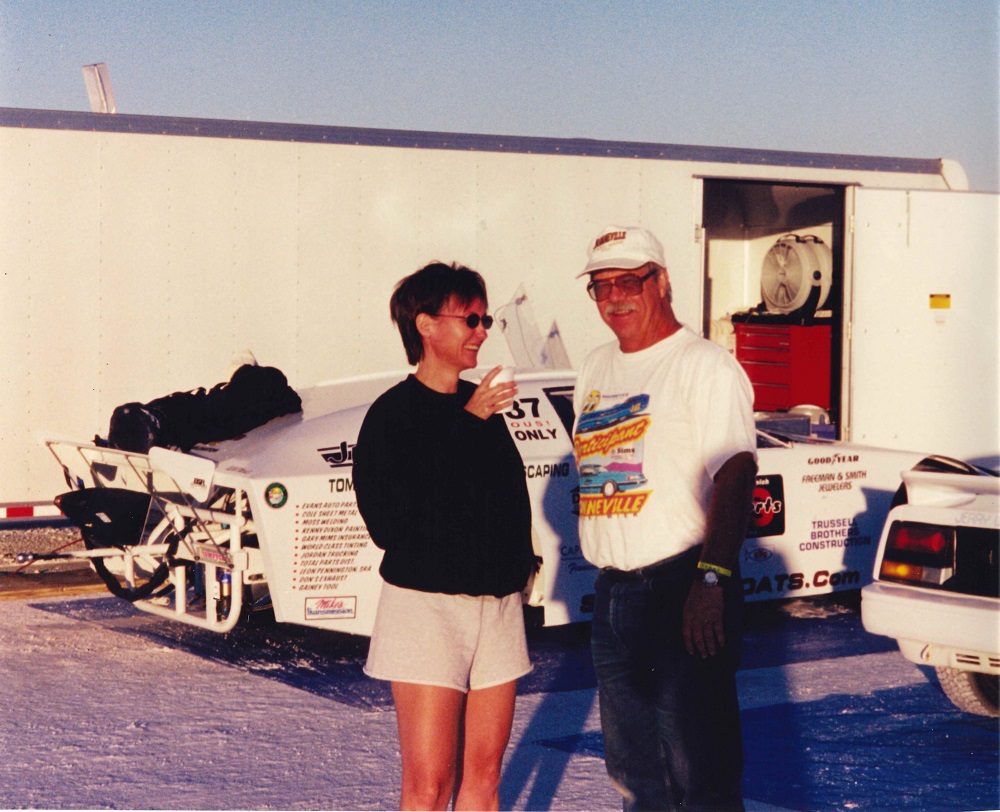
I found the place to be fascinating in a lot of ways. Since I have been around many drag strips with Mike as both a participant and a spectator I assumed this would be very similar. Folks generally are working on their own cars and pretty much staying to themselves. They don’t want to give away any secrets to the competition, of course. This was different. Mike had to go through a technical inspection. The staff was very professional and could not have been more welcoming. They see a lot of the same faces year after year so they are grateful when a new entrant comes along. Next, the time trials are a lot more participative for the whole race team. As I mentioned earlier, the whole team rode in the push vehicle and pushed Mike until the car took off. Then we followed him all the way to the end. The staff and racers had such a camaraderie. There was a lot of lending of parts and tools and advice. Competitors even helped people in their same class beat their records. I guess it can be attributed to the fact that there is no money in it. Not a dime. Being from South Carolina we cannot be participants every year but it has been a privilege to be part of it the few times we were able to go. Americana at its best!
 Mike Welch Modifieds